Signs of an underfloor heating leak
Wet underfloor heating is a sealed system. Water runs from the boiler to a manifold, then through loops of plastic pipe buried in screed or laid between joists, and back again. If water escapes anywhere on that circuit, the system has to be topped up to replace it. The common signs are:
- The boiler pressure keeps dropping, sometimes within hours, sometimes over weeks. On one of our jobs in Surrey the boiler lost pressure within an hour of being reset.
- A warm patch that stays warm when the heating is off, or one that is out of line with the rest of the floor.
- Damp at the edges: stained skirting boards, dark grout lines, lifting laminate or engineered wood, a musty smell.
- Water coming up through gaps in the floor or at the threshold of a door.
- White salts on screed or tiles, often in the manifold cupboard, where water has evaporated and left minerals behind.
- A room that will not heat while the others do, which can mean air has got into a loop that is losing water.
None of these proves the underfloor heating is leaking. A radiator pipe, the hot water supply or a waste pipe running through the same floor can produce exactly the same signs. More on signs by floor type.
Check the manifold first
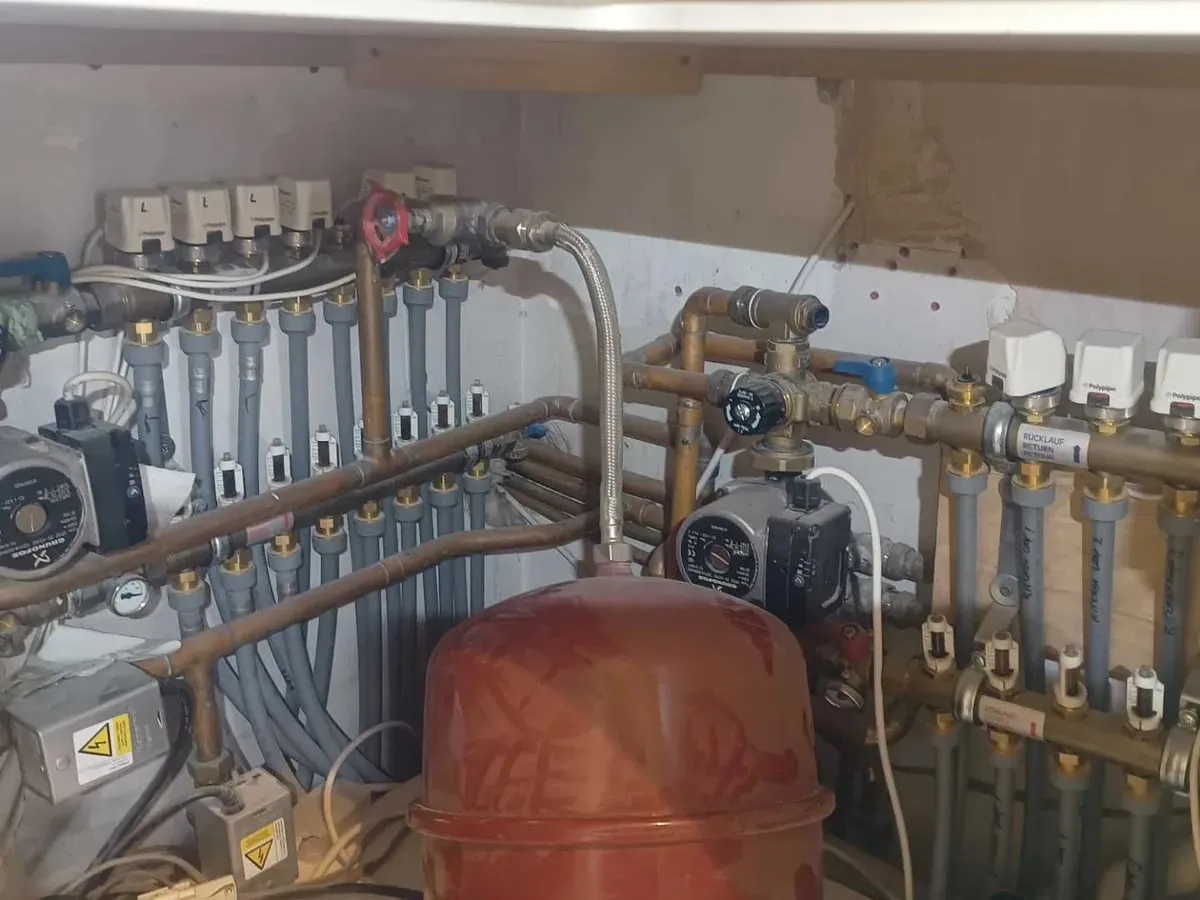
The manifold is the bar of valves, usually in a cupboard, that feeds each loop. It has more joints than the rest of the system put together, and it can be seen without lifting anything. Before assuming the leak is in the floor:
- Look and feel along the flow and return bars, each valve, the actuators on top and every pipe connection underneath. A dry tissue shows a slow weep.
- Check the pump, the mixing valve and any pressure relief valve. A relief valve that discharges when the system heats up can make it look as if water is being lost.
- Look for white or green crust on fittings. It is a sign of an old or intermittent weep.
- Look at the floor in the cupboard. Salts or damp there can come from the manifold or from a pipe passing under it, as they did on our Burnham-on-Crouch job.
If the manifold is dry, the leak is somewhere you cannot see, and the next step is testing.
What makes underfloor heating pipes leak
Underfloor heating pipe is tough, and leaks in the middle of a continuous loop are uncommon. When they happen, the cause is usually one of these:
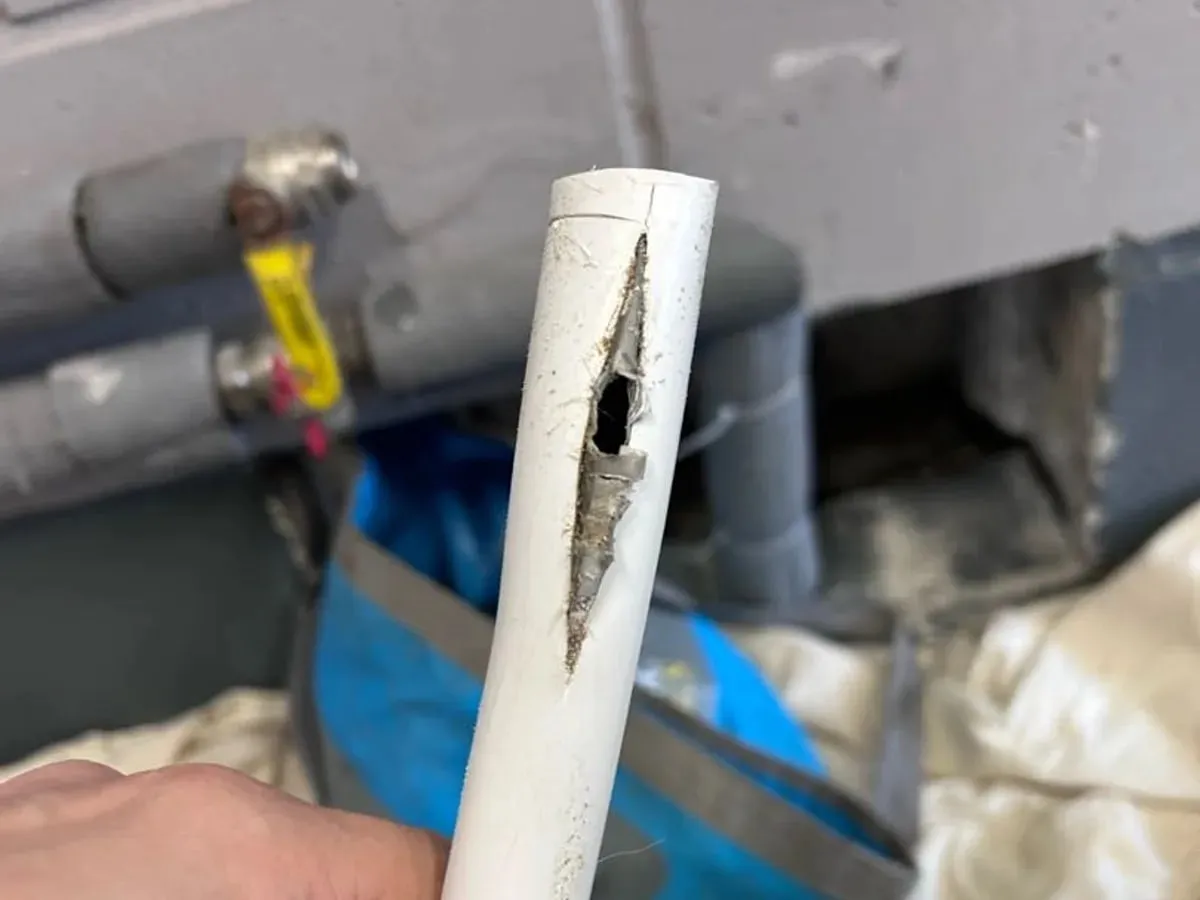
- Damage while the floor was being laid: a pipe nicked by a trowel, crushed by a wheelbarrow or pierced before the screed went down.
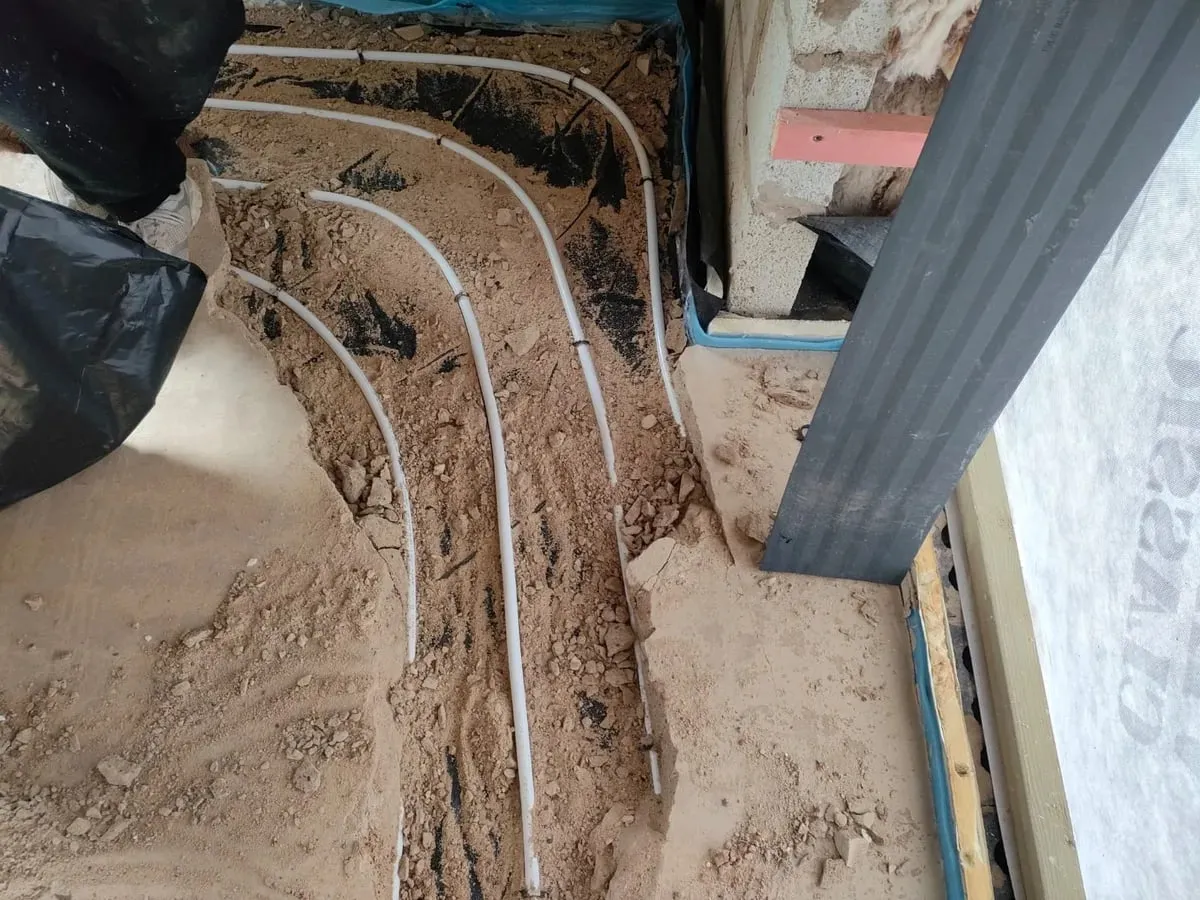
- A joint in the floor. Loops should run unbroken from the manifold, but repairs and extensions add couplers. On our Burpham job a push-fit coupler had slowly backed off the pipe, most likely from movement in the structure.
- A screw or nail through the floor after it was finished, for a threshold strip, a kitchen unit or a carpet gripper.
- Unsuitable fittings on buried plastic pipe. In Marlborough the pipe manufacturer does not recommend permanent push-fit fittings on buried plastic pipe of that kind, which shaped the repair.
- Pressure and temperature. Running the system hotter than it was designed for puts extra strain on plastic pipe and joints.
How an underfloor heating leak is found
The survey works from the whole system down to one spot. The order changes from house to house, but the logic is the same.
1. Split the system and test each part
The engineer isolates the underfloor heating from the radiators and the boiler, then closes the loops at the manifold and pressure tests them one at a time, with water or with air. A gauge that holds clears that loop. A gauge that drops identifies it. In Marlborough the loop held nothing at 2 bar, and the air could be heard escaping through a wall.
2. Map where the pipes actually run
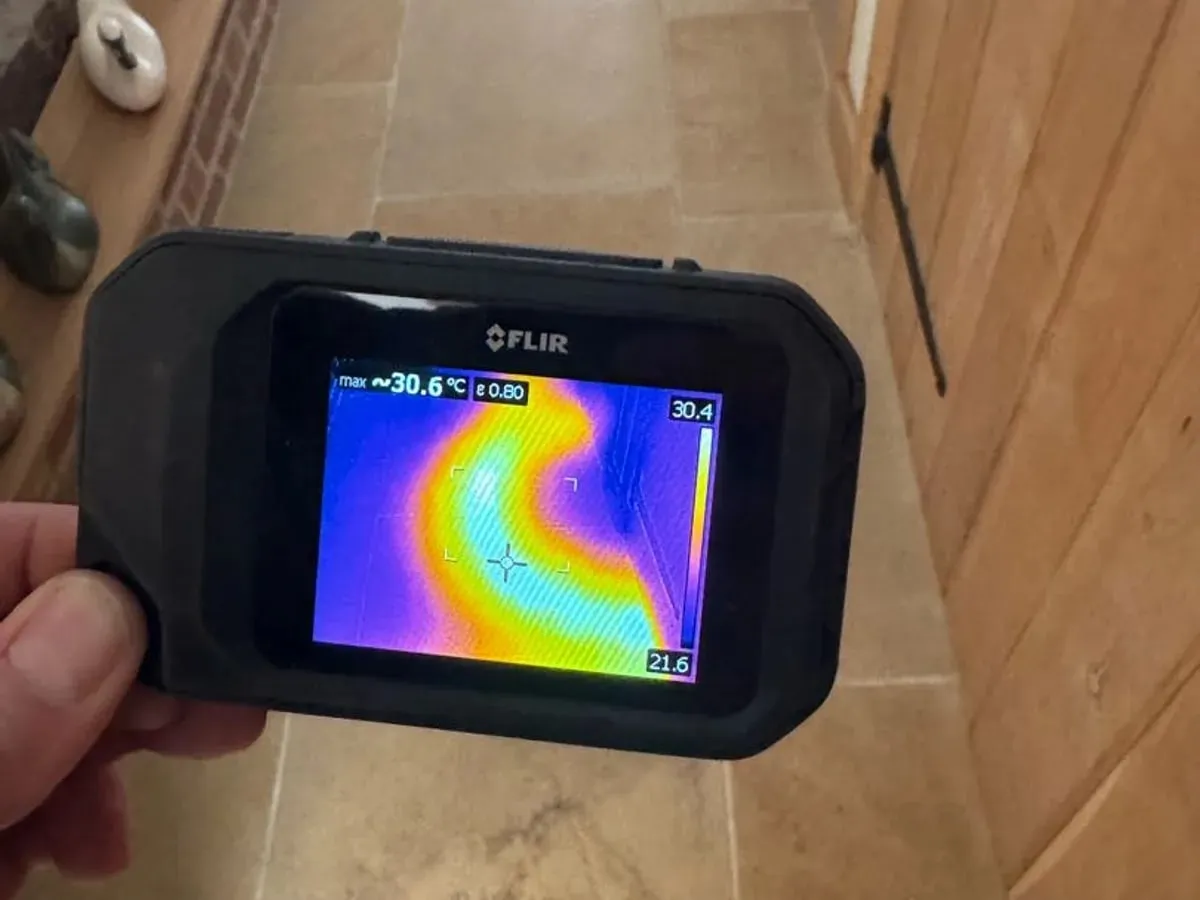
Drawings are often wrong, and so is memory. With warm water running through the loop, a thermal imaging camera shows the pipes as lines on the floor. On our Nottingham job the engineer was told the leak was in the middle of the room; the thermal camera showed the pipes ran down the left side.
3. Pinpoint the spot on the loop
With the leaking loop known and its route mapped, the engineer narrows it down:
- Thermal imaging looks for warm water spreading away from the pipe line.
- Tracer gas, a safe mix of hydrogen and nitrogen, is put into the drained loop and detected where it comes up through the screed.
- Acoustic listening follows the sound of water or air escaping under pressure.
- Moisture readings map how far the water has spread.
Underfloor heating can mislead every one of these. Loops laid in a ring carry sound along the pipe, gas follows gaps in the screed, and the heating makes its own warm patterns. The engineer only recommends opening the floor where the methods agree. What each instrument can and cannot do.
When it is not the underfloor heating
Some of the most useful surveys end by proving the underfloor heating is fine. In a floor with heating loops there are usually other pipes too: hot and cold supplies, radiator flow and return, a softener bypass, waste pipes. Our published cases include:
- Battle: underfloor heating throughout, but the pressure tests put the leak on a hot water T-piece behind a wall.
- Burnham-on-Crouch: salts in the manifold cupboard, yet isolation testing put the leak on the water softener bypass under the kitchen.
- Beccles: fourteen underfloor zones passed their tests; the leak was a cracked fitting on the radiator pipework.
Knowing this before anything is opened saves breaking screed in the wrong room.
Repair and what comes after
Once the spot is confirmed, the floor is opened above it, usually a few tiles or a small patch of screed. The damaged pipe is cut out and rejoined with fittings suitable for buried pipe, or re-run where a joint in the floor is not a good idea. The loop is pressure tested again, the system refilled and inhibitor added.
Two things often follow:
- Drying. Screed holds water. If the leak ran for a while, the area needs to dry before tiles or wood go back down. Moisture readings show when it has.
- Advice about the rest of the system. The engineer may note the condition of pipes they have seen, fittings to replace, or settings to change, as happened in Marlborough where the boiler flow temperature was turned down.
Insurance
If your home insurance includes trace and access cover, it normally pays for finding the leak and opening the floor. ADI’s no find, no fee terms do not apply to central heating, which includes wet underfloor heating. How insurance usually works.