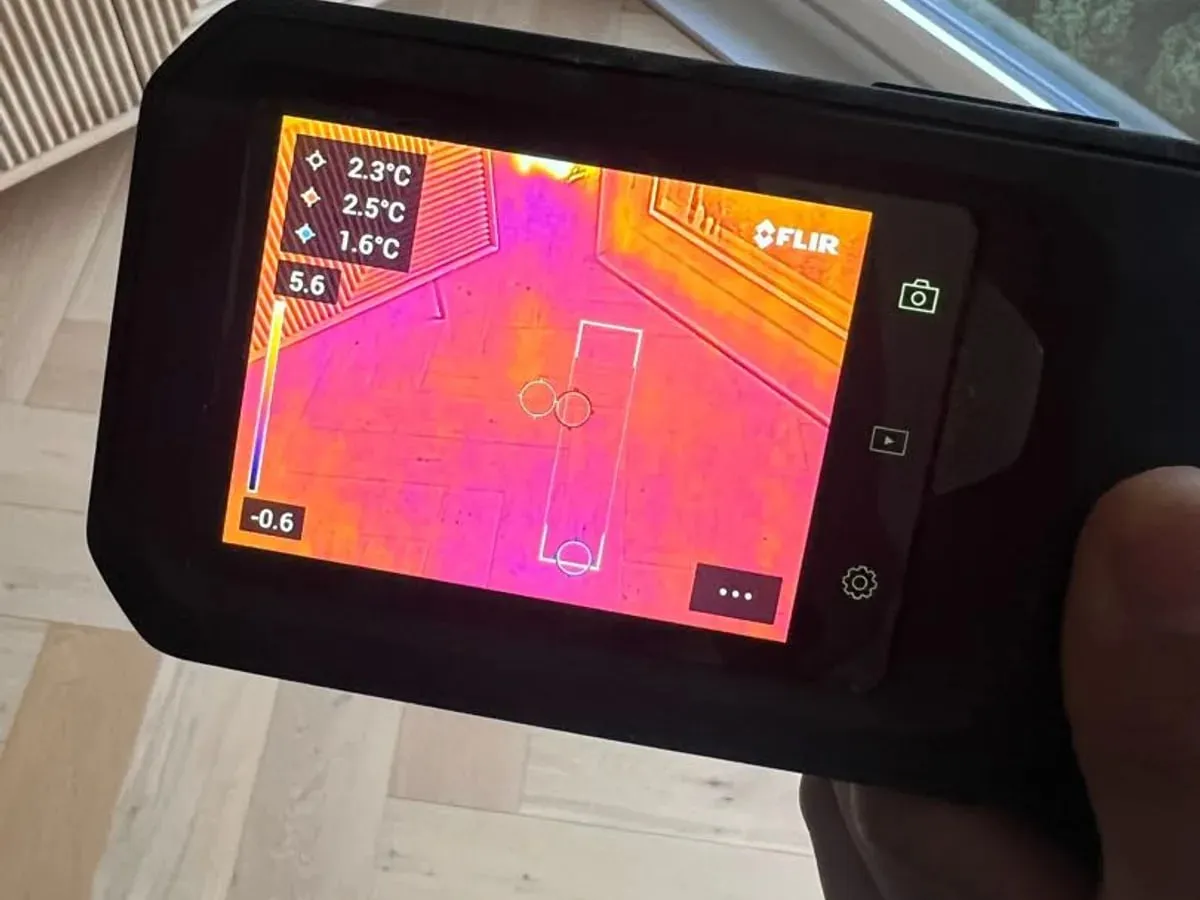
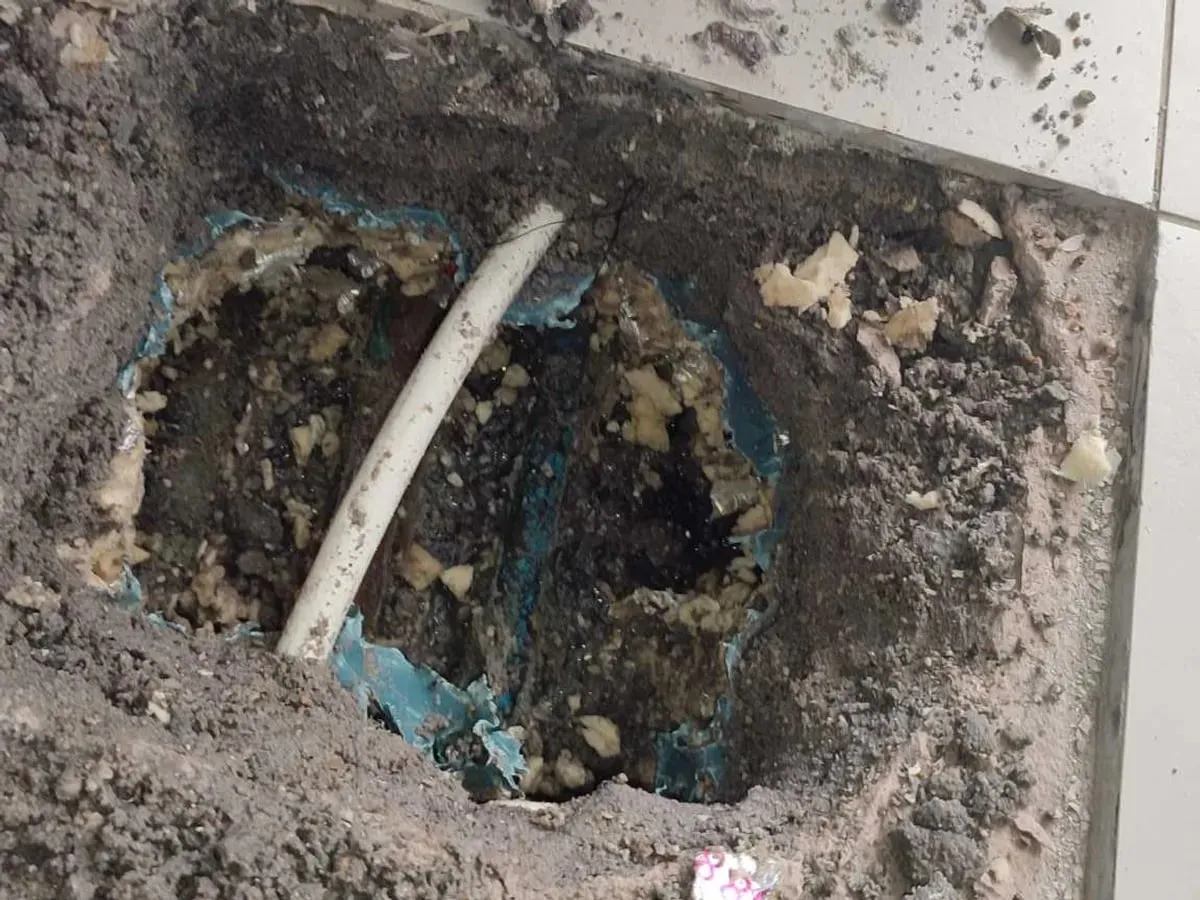
Signs of a leak under the floor

A leak under the floor shows differently depending on what is on top: dark grout on tiles, lifting joints on laminate, a stain on the ceiling below floorboards, or nothing but a falling boiler gauge. These are the signs to look for, and the ones that often turn out to be something else.

Call 0333 567 2639

Monday to Friday, 7:30am to 6:30pm. The office will explain how the survey would work at your property.

Excellent 4.7 out of 5 from 1,618 reviews of ADI Leak Detection on Trustpilot (opens in a new tab)

Signs by floor type

Signs of a hidden leak for each type of floor
FloorWhat you might notice
Tiles or stone on screedDark or damp grout lines, a warm tile, white salts in the grout, tiles that sound hollow or crack, water at the edge of the floor.
Laminate, LVT or engineered woodBoards that lift, cup or separate at the joints, a soft or springy spot, water coming up at the edges or thresholds.
CarpetA damp or cold patch, a musty smell, gripper rods and underlay stained at the edge, mould at the skirting.
Timber floorboards upstairsA stain or bulge in the ceiling below, drips at a light fitting, boards that feel damp or smell.
Suspended floor downstairsDamp air, a musty smell, condensation, the heating losing pressure or the meter moving with little else to see.
Underfloor heatingThe boiler losing pressure, a patch that stays warm with the heating off, salts or damp in the manifold cupboard, a zone that will not heat.

Signs on any floor

  • The water meter moves when every tap and appliance is off. This points to the water supply.
  • The boiler keeps losing pressure with no drips anywhere. This points to the heating.
  • A higher water bill than the same period last year, with no change in use.
  • A hiss or trickle when the house is silent, often clearest at night.
  • Damp at the base of walls that is new, or that appeared after the floor changed.
  • A floor that is warmer in one area than it used to be.

Several of these together make a hidden leak much more likely than one on its own.

Things that look like a leak under the floor

Plenty of damp floors have no leak under them. The common causes:

  • A leak somewhere else that runs along the floor: a shower tray seal, a bath waste, a toilet connection, a dishwasher or washing machine hose. In one review, what looked like an underfloor heating leak was a toilet pipe, with the water travelling under the floor.
  • Condensation, especially on cold solid floors under rugs or in bathrooms, which comes and goes with the weather.
  • Rising or penetrating damp from outside, which usually follows external walls and does not move a meter or a pressure gauge.
  • Spills and cleaning that have soaked into a floor finish.

A proper survey tests the pipes rather than guessing from where the damp is. If the pipes all hold pressure, you know to look elsewhere, which is useful to know before anything is dug up.

What to do next

Do the simple meter and boiler checks to see which system is involved, turn the water off if it is coming up through the floor, and take photos. Checks you can do safely. Then call and describe what you have found.

Guides by floor: underfloor heating, concrete and screed, floorboards.
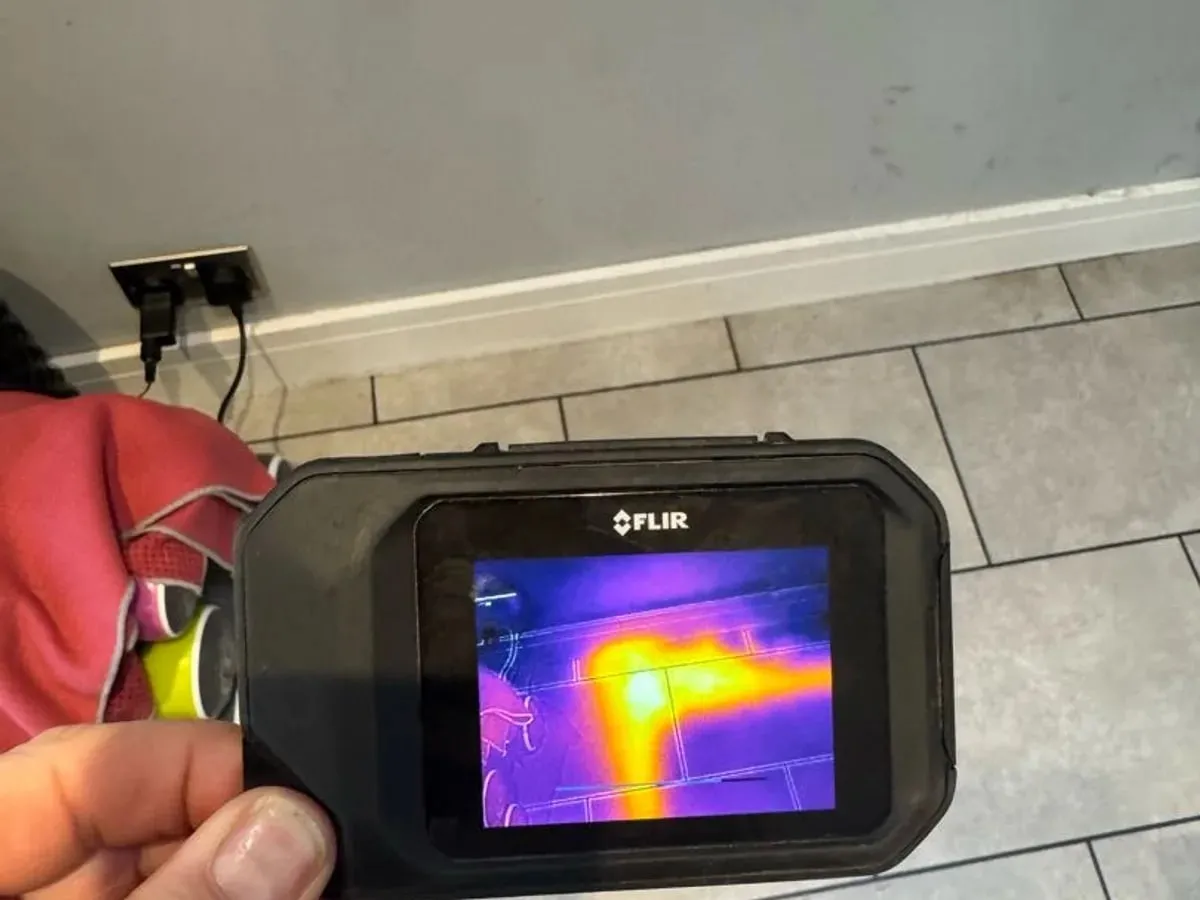
What the signs looked like on real jobs

Published ADI Leak Detection jobs, with the engineer’s own photos. All case studies.

  • Burpham, Surrey. Underfloor heating, Concrete slab

    Boiler losing pressure within the hour, water at the skirting

    Water was rising through gaps in the living room floor. Three methods agreed on one spot, a few tiles were lifted, and a push-fit coupler had slid off the plastic heating pipe.

    Leak found; joint remade with crimped fittings; pressure held

  • Motherwell, Lanarkshire. Floorboards

    Buckled laminate and a pressure drop nobody could place

    Another engineer had confirmed the system was leaking but not where. Thermal, moisture, acoustic and tracer gas readings agreed on the living room before a single board was lifted.

    Pinhole found; section replaced in copper

  • Burnham-on-Crouch, Essex. Underfloor heating, Screed floor

    Salts in the manifold cupboard, paving collapsing outside

    It looked like an underfloor heating leak. Isolation testing put it on the water softener bypass instead, and thermal, acoustic, tracer gas and moisture readings all pointed to one threshold.

    Leak found at the kitchen threshold; copper pipe replaced; retest clear

What customers noticed first

Reviews of ADI Leak Detection on Trustpilot, quoted word for word. More reviews that mention floors.

Questions people ask

More answers on the questions page.

How do I know the leak is under the floor?

The usual signs are a warm patch on a floor that should be cold, damp or lifting flooring, water at the skirting with no leak above it, a musty smell, a boiler that keeps losing pressure, a water meter that moves when every tap is off, or a hissing sound with nothing running.

One sign on its own can have other causes, such as condensation, a shower seal or a leak in the wall. A survey tests the pipes rather than guessing from the stain. See signs of a leak under the floor.

Why is one patch of my floor warm?

A warm patch that stays warm when the heating is off usually means hot water escaping from a heating or hot water pipe under that spot. With underfloor heating on, warm patterns are normal, so the test is whether the patch stays warm, spreads or is out of line with the loops.

Water is coming up through my floor. What should I do right now?

If it is clean water and still coming, turn the water off at the stopcock. If the boiler pressure is dropping as well, turn the heating off. Keep electrics away from the water and take photos and meter readings before anything is moved.

Then call us on the number at the top of the page. The office is open Monday to Friday, 7:30am to 6:30pm. What to check before you call.

Could the water be coming from somewhere else?

Yes. Water travels under floors along pipe channels, joists and the screed, so it can appear metres from the leak. On one of our jobs what looked like an underfloor heating leak was a toilet pipe, and in Battle a house full of underfloor heating turned out to have a leak on the hot supply behind a wall.

That is why the survey starts by testing which pipe is leaking before looking for where. Read the Battle case.

Call 0333 567 2639

Mon to Fri, 7:30am to 6:30pm